
Truck Weigh Stations and Roadside Inspections: A Practical Guide for U.S. Drivers
How to check axle weights, approach a weigh station, and prepare for a roadside safety inspection without surprises.
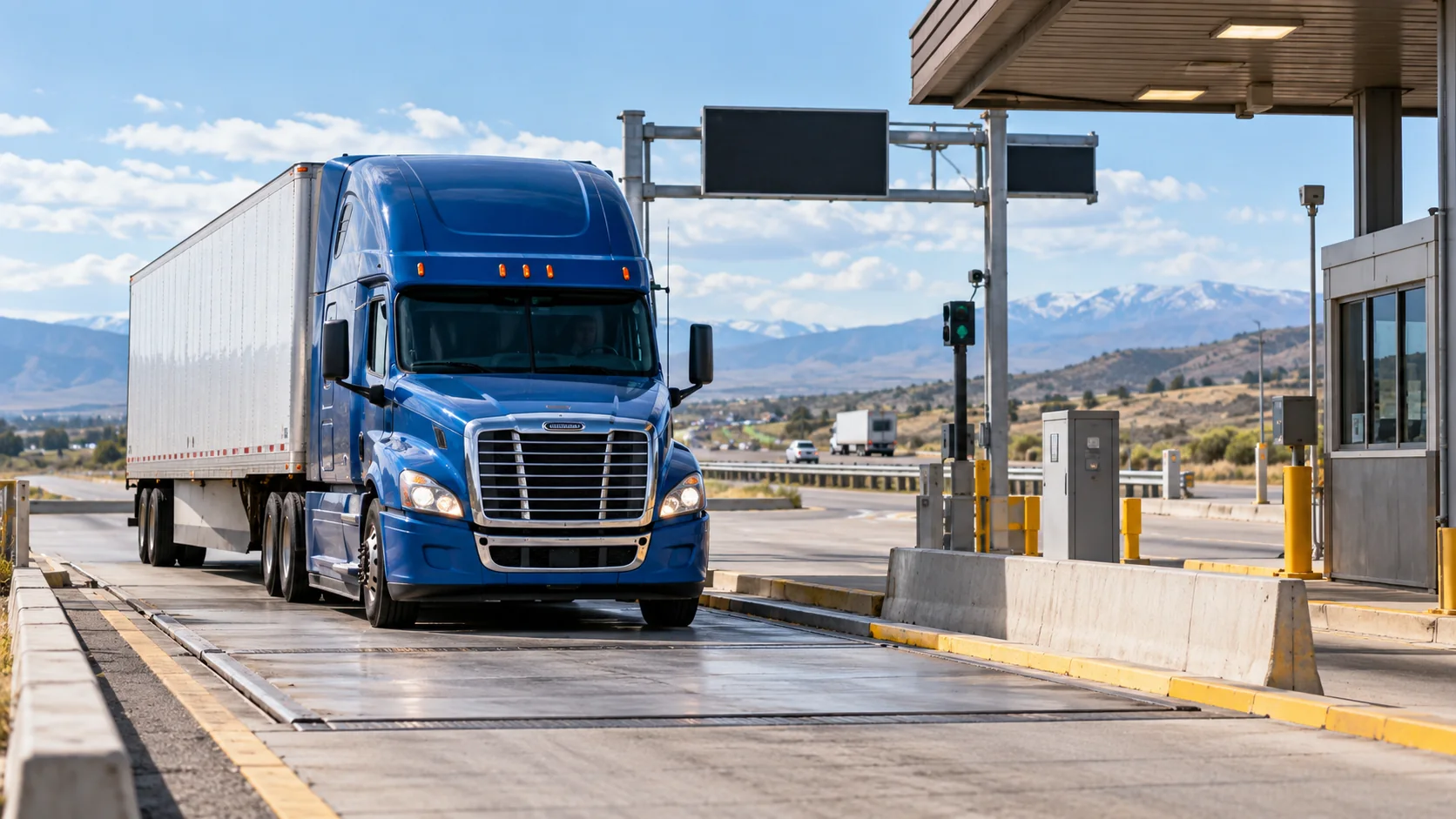
A weigh station can be a routine two-minute stop or the start of a much longer inspection. For an American truck driver, the difference often comes down to preparation before the truck reaches the ramp. A legal gross weight matters, but so do axle weights, vehicle condition, cargo securement, records, and the instructions displayed at a particular facility.
It is easy to think of a weigh station as a place where someone checks one number and waves a truck through. In practice, states use these facilities to enforce weight rules and conduct commercial vehicle safety inspections. The process varies by state and by station, so a driver should follow the posted signs and directions on the route rather than assume that yesterday's experience will repeat itself.
This guide explains the weight questions worth settling before departure, what typically happens at a station, and how to approach a roadside inspection calmly and professionally.
Start with axle weights, not just the gross number
On the Interstate System, the general federal limits are 80,000 pounds gross vehicle weight, 20,000 pounds on a single axle, and 34,000 pounds on a tandem axle. The Federal Bridge Formula can impose a lower limit on a particular group of axles based on their spacing. Permits and certain state-specific exceptions complicate the picture, so “under 80,000” alone is not a complete weight check. The Federal Highway Administration's Bridge Formula guide explains how gross, single-axle, tandem, and axle-group limits work together.
Consider a loaded five-axle tractor-trailer that is legal on gross weight but has too much of the load concentrated over the trailer tandems. The total may look comfortable on a shipping document while the axle group is still over its applicable limit. Sliding the tandems can redistribute weight between the drive and trailer axles, but it cannot make an overweight load disappear. The change also affects axle spacing, so the driver needs to recheck the complete combination rather than treating one adjustment as proof of compliance.
A practical approach is to verify the loaded weight at a reliable truck scale when the load, trailer, or shipper's estimate creates uncertainty. Keep the scale ticket, compare each axle group with the applicable limits, and resolve a problem before committing to a long route. Sometimes repositioning freight is the only sensible fix; a driver should not be pressured into assuming that a close estimate is good enough.
Why the same truck can face different rules on different roads
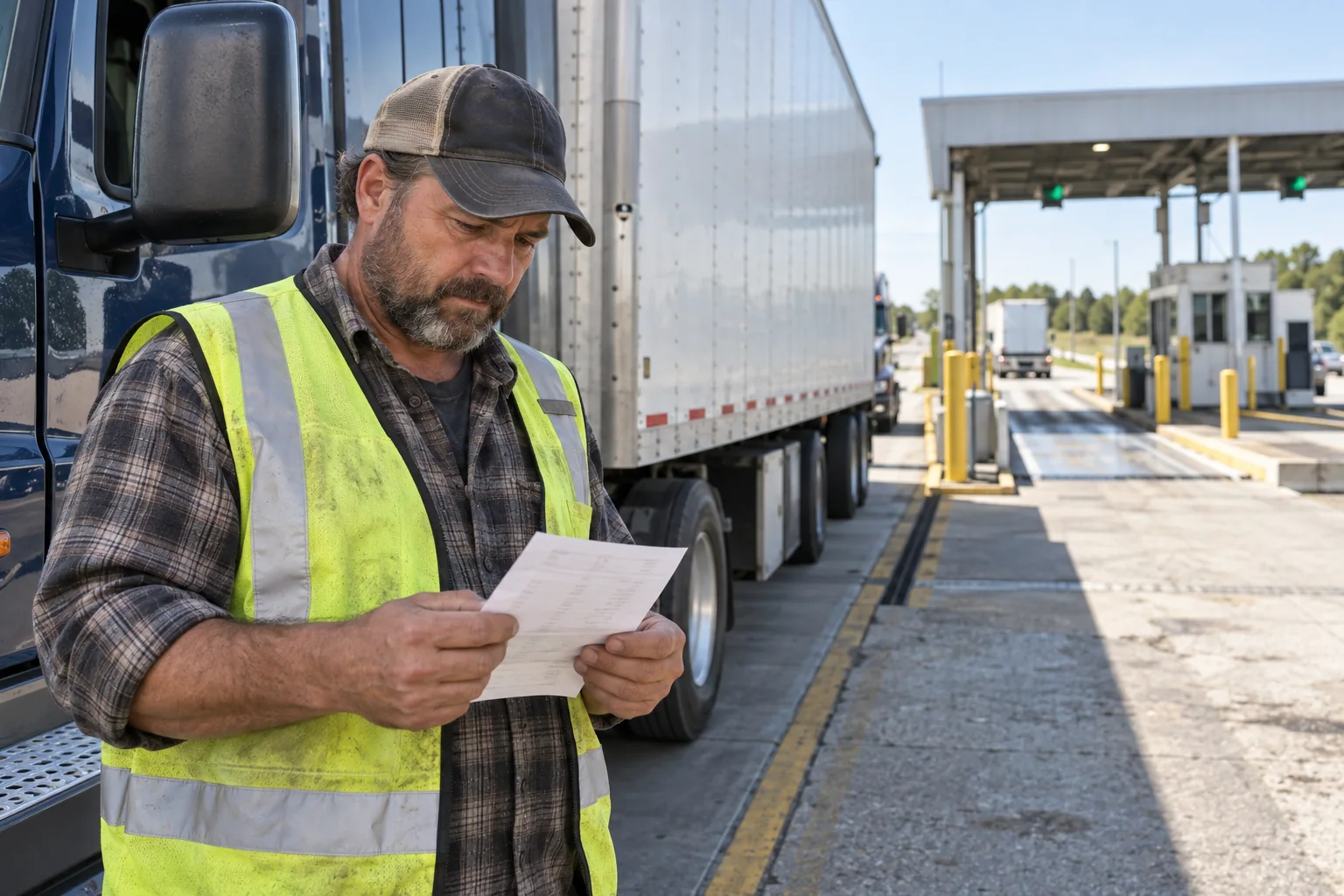
Federal Interstate standards are a starting point, not a universal description of every road in the country. States can set weight rules for non-Interstate routes, and an oversize or overweight movement may require a permit with route and operating conditions. Some Interstate exceptions also exist. The FHWA overview of commercial vehicle size and weight distinguishes Interstate standards from state authority off the Interstate System.
That is why trip planning should include more than a line on a navigation screen. A route may have a bridge posting, local truck restriction, permit condition, or designated approach to a port of entry. A commercial-vehicle route plan and the carrier's instructions should be checked against the signs on the road. If a route changes unexpectedly, the driver should confirm that the alternate road is legal for the vehicle and load before taking it.
Approaching the weigh station
As the station approaches, read the advance signs early, reduce speed smoothly, and leave enough room for trucks entering the same lane. A facility may use a weigh-in-motion lane, a static platform scale, or both. Signals and personnel direct the next step. Some vehicles are released quickly; others are sent to a secondary scale or an inspection area.
An authorized electronic bypass instruction can change whether a participating truck must enter a particular open station, but it is not a permanent exemption from inspections. Drivers should follow the instruction actually received for that approach and any direction given by enforcement personnel. If there is uncertainty about a signal or a posted requirement, the safe choice is to slow down and follow the facility's instructions rather than guess.
At the scale, steady and controlled driving helps the equipment measure the truck correctly and keeps workers safe. Do not stop or change lanes abruptly unless directed. Once the truck is pulled aside, park where instructed, set the brake, and wait for the officer's directions before leaving the cab.
Weight checks and safety inspections are different things
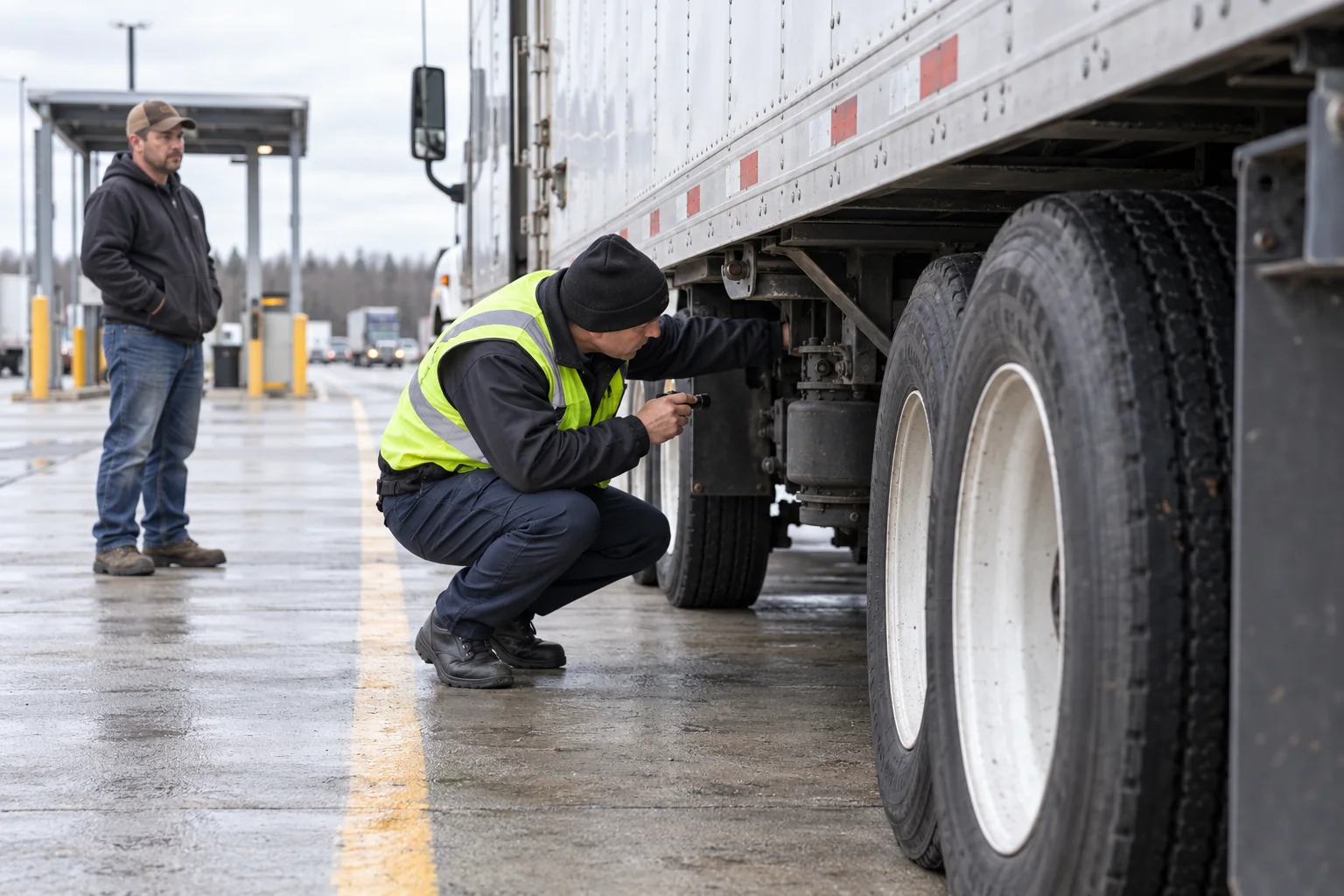
A truck can be legal on weight and still have a safety defect. The Commercial Vehicle Safety Alliance describes several North American Standard inspection levels. A Level I inspection examines both the driver and the vehicle and includes items such as credentials, hours-of-service records, brakes, tires, lights, coupling devices, and cargo securement. A Level II inspection is a walk-around driver and vehicle inspection that does not normally require the inspector to go physically under the vehicle. A Level III inspection focuses on driver credentials and administrative requirements.
Not every station visit becomes a Level I inspection, and an inspection can also happen at a temporary site or roadside location. The point is not to predict exactly which level an officer will choose. It is to keep the truck, trailer, load, and required records ready on every trip.
Preparation begins before the first mile
The pre-trip inspection is the best opportunity to catch a problem while the truck is still in a place where it can be repaired. Federal rules require a driver, before operating, to inspect the vehicle and be satisfied that it is in safe operating condition. The FMCSA Safety Planner's explanation of the pre-trip requirement also discusses reviewing a prior driver vehicle inspection report when applicable.
A useful walk-around gives deliberate attention to tires and wheels, lights and reflectors, visible brake components, air and electrical lines, the fifth-wheel connection, trailer doors, and anything leaking or hanging loose. The driver should confirm that the equipment matches the load: a dry van, reefer, tanker, and flatbed have different operational checks. A defect discovered before departure is an issue to resolve, not a reason to hope that the next station is closed.
Cargo deserves the same attention. For freight to which the federal cargo-securement rules apply, the securement system must keep articles from shifting or falling, and the appropriate method depends on the cargo. The FMCSA cargo-securement guidance explains the general requirements and identifies commodities with special rules. A sealed trailer may limit a driver's ability to inspect the contents directly, but the driver should still follow company procedures, verify the information available, and raise concerns about an apparently unsafe or improperly loaded shipment.
Records matter too. Keep the documents required for the trip accessible, understand how to display the electronic record of duty status when required, and know whom to contact at the carrier if an officer asks for information the driver cannot immediately locate. Organized paperwork will not cure a mechanical violation, but it makes a routine interaction clearer and faster.
If an inspector finds a problem
Stay professional, listen to the finding, and ask what must be corrected before the truck may continue. The response depends on the defect and the direction given by the inspecting officer. A minor issue may be documented for correction; a serious condition can place the vehicle or driver out of service. CVSA's inspection policies describe how inspectors handle out-of-service notices and related procedures. Do not resume a trip contrary to an out-of-service order.
Contact dispatch or maintenance promptly, share the inspection report, and arrange a compliant repair or load adjustment. If weight is the issue, get a new scale reading after the correction instead of assuming that a tandem move solved it. If cargo needs to be repositioned, coordinate with the shipper or carrier rather than making an unsafe adjustment on the shoulder.
It is also worth treating every inspection as feedback. A recurring light, tire, brake, or paperwork problem points to something that should change in the daily inspection routine or maintenance process. The goal is to leave the next station with a safer truck, not merely a faster stop.
A simple routine for the next trip
- Before loading: confirm the planned route, any permit conditions, and the vehicle's operating limits.
- After loading: verify cargo securement, obtain weight information, and use a truck scale when distribution is uncertain.
- Before departure: complete a careful pre-trip inspection and make required records accessible.
- On approach: read station signs early, follow actual bypass or entry directions, and drive through the facility smoothly.
- If selected: follow the inspector's instructions, document the result, and correct any issue before continuing when required.
Weigh stations are part of ordinary American trucking. A driver cannot control whether a truck is selected for an inspection, but can control the preparation: know the weight on each axle group, keep the vehicle and cargo in good condition, maintain the required records, and respond to directions without rushing. That preparation protects the trip even when the station visit is brief.