
Warehouse Arrival Planning: A Truck Driver's Last-Mile Checklist
How truck drivers can confirm receiving gates, check the final approach, handle conflicting directions, and use navigation without last-minute improvisation.
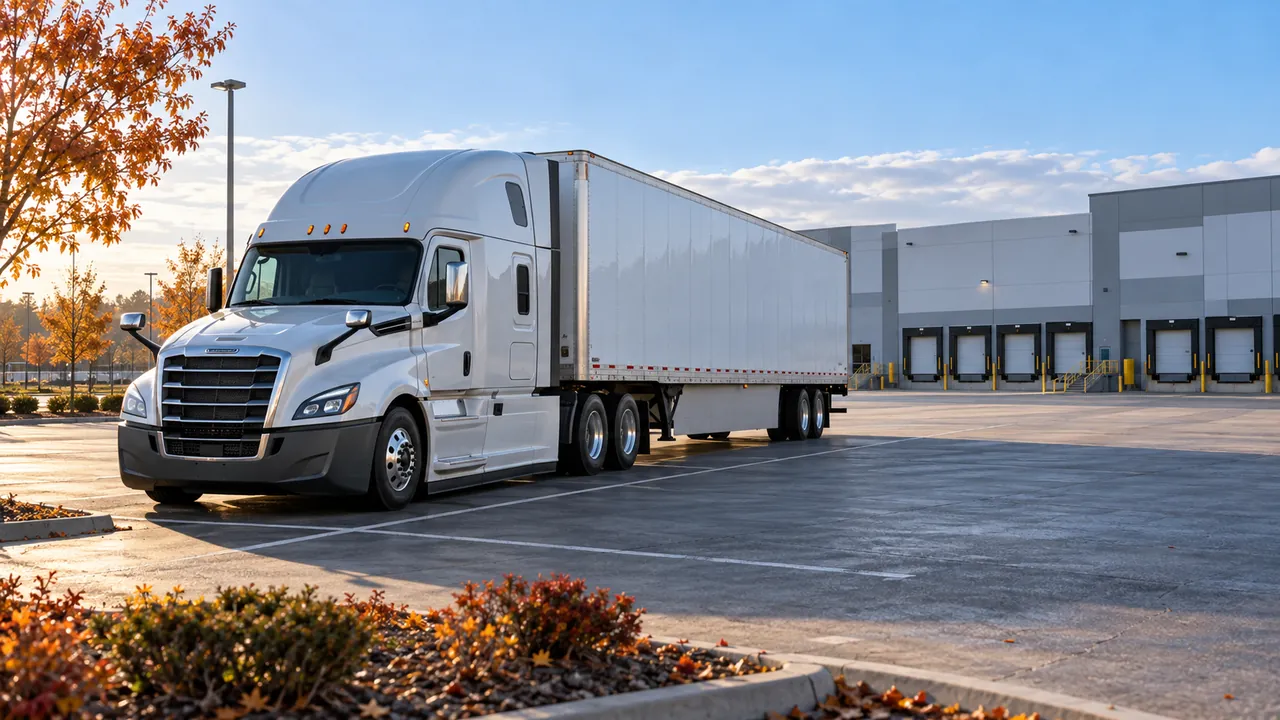
A truck can complete hundreds of uneventful highway miles and still lose its delivery plan in the final ten minutes. A street address may point to an office entrance, a car-only access road, or the wrong side of a large industrial property. The navigation screen can show the destination directly ahead while the receiving gate sits around the block. For a driver towing a full-size trailer, that difference matters long before the truck reaches the driveway. A useful arrival plan connects three things: the actual vehicle, the legal approach, and the entrance the receiver expects trucks to use.
This is not an argument against navigation technology. It is a way to use it more deliberately. A truck-routing device can organize an unfamiliar trip, but it cannot resolve every temporary restriction, construction change, or misleading delivery instruction. The most effective check happens while the vehicle is parked, with enough time to ask a clear question and receive a useful answer. By treating the final approach as a separate planning task, drivers and dispatchers can avoid turning an ordinary delivery into an improvised search through residential streets.
Start with the truck that is actually being driven
Before reviewing the map, confirm that the navigation profile describes the current combination rather than yesterday's assignment. Trailer type, vehicle dimensions, weight information, and any applicable cargo restrictions can change what a suitable route looks like. Do not assume that a saved profile remains correct after swapping equipment. Use verified equipment information from the carrier, and follow the navigation manufacturer's instructions for entering it. If a required detail is unknown, resolve that uncertainty with dispatch instead of choosing a convenient value simply to make the device calculate a route.
The FMCSA's guidance on navigation systems recommends equipment intended for commercial drivers, entering relevant vehicle information before departure, keeping maps current, and obeying road signs and advisories. These are useful foundations, not a guarantee that every suggested turn is appropriate. A route still has to agree with what is posted on the road. A clearance warning or truck restriction does not become optional because a screen continues to display an attractive arrival time.
Separate the mailing address from the receiving entrance
Read the shipping instructions for a gate number, street name, receiving department, or designated staging area. Compare those details with the location on the map. Large warehouses may have several entrances, and a building's street number may identify the customer lobby rather than the truck gate. A short message such as “use the north entrance” also needs context: north of which building, reached from which road, and available during which operating hours? Record the answer in plain language that another person can understand without seeing your screen.
When instructions conflict, contact the receiver through a verified number supplied by the carrier or established shipping documents. Ask for the truck entrance street, the direction of approach, and the place where an early arrival should wait. If the gate has moved, request confirmation through the normal dispatch channel. Avoid treating a random online review or an unverified message as an authoritative change to the delivery instructions. Such information may be a useful clue, but it should trigger a question rather than replace the customer's current directions.
Review the last few turns before starting them
Zoom out enough to understand the industrial area's road layout, then examine the final approach. Look for a planned turn that would require crossing an awkward median, entering through a passenger parking lot, or making an immediate second turn with little room to straighten the trailer. Images can help explain a property, but their age and camera angle limit what they prove. An apparently empty yard in an older image may now contain parked trailers, construction fencing, or a relocated guard booth. Treat aerial views as planning aids rather than measurements of usable space.
Write down a brief arrival sequence while parked: approach road, truck gate, check-in point, and authorized waiting location. Keep it short enough to recall without reading a paragraph in traffic. This creates a practical distinction between the broad route and the final approach. The broad route brings the truck to the industrial area; the arrival sequence gets the driver to the correct receiving process. If either part changes, stop somewhere appropriate and review the revised plan before continuing.
Check current conditions through the right channels
A route that worked on a previous visit may be affected by a closure or a temporary restriction today. Review the relevant state transportation department's traffic information and the carrier's routing notices before departure. Confirm how a reported disruption affects the particular approach road rather than assuming the entire destination is inaccessible. A closure several blocks away may require a different entrance direction, while a restriction at the only approved truck gate may require the receiver to provide a completely different plan.
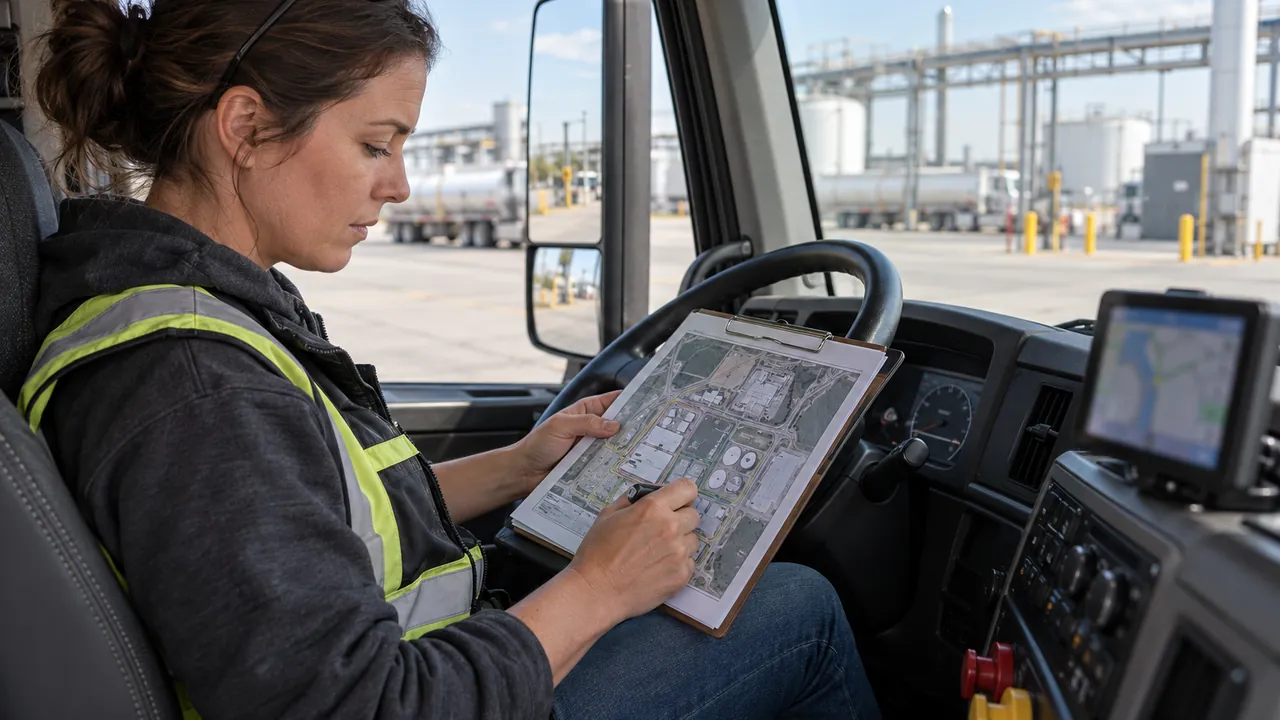
Dispatch can help by sending confirmed information in one consolidated update. Several partial messages, each changing a different turn, make the driver's task harder. A useful update identifies what changed, the source of the information, and the new approach that has been checked. If no suitable route is confirmed, the honest status is “awaiting directions.” An unsupported promise that the truck will somehow find a way through does not solve the access problem and can create unnecessary pressure to continue.
Decide what to do if the entrance does not match
Planning includes recognizing the point at which the plan should be reconsidered. A posted restriction, blocked gate, unsuitable driveway, or different business name is a reason to pause the delivery process. Do not enter a doubtful access road merely because the destination icon is close. Continue only along a route that can be used safely and lawfully, and stop at an authorized location before investigating further. Avoid reversing on a public road or using a random private lot as a substitute for a planned turnaround.
Tell dispatch what you can verify: your location, the posted information, which entrance appears blocked, and whether there is an approved place to wait. Do not send photographs, type directions, or study a map while moving. The FMCSA's driver-distraction guidance specifically addresses the risk of reading and writing while driving. The safe place to troubleshoot an arrival problem is a suitable stopping location, not the middle of a complicated junction.
Leave a better note for the next visit
After completing the delivery, update the carrier's location record through its normal process. Record the entrance actually used, the check-in sequence, and any instructions the receiver confirmed. Include the date of the visit so that a future driver can judge how current the note is. Avoid storing personal phone numbers or photographs of restricted areas unless the carrier and facility permit that information to be retained. A useful location note explains access without creating a separate privacy or security problem.
A good final-approach routine does not need a complicated app or a long checklist. It needs verified equipment information, a confirmed truck entrance, a route that agrees with posted restrictions, and a clear response when the conditions do not match the plan. That small investment before arrival protects the driver from having to solve every uncertainty at once. The destination is not simply a pin on the map; it is a place the entire vehicle must be able to reach and enter appropriately.