
What Does a Truck Driver Do Every Day?
Explore a truck driver's daily routine, from pre-trip inspections and route planning to freight delivery, Hours of Service, fueling, parking, and end-of-day checks.
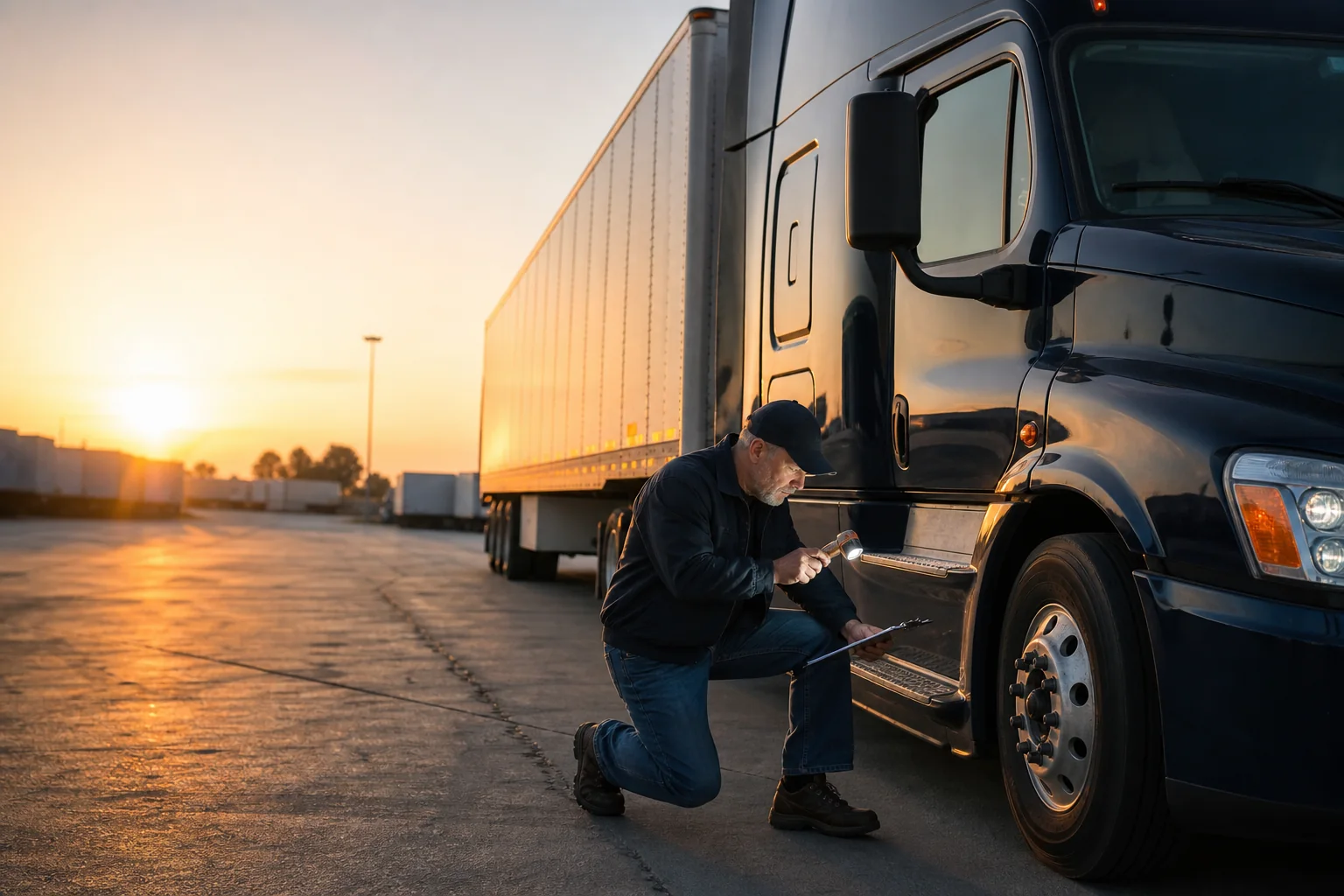
When people imagine the daily life of a truck driver, they often picture one thing: sitting behind the wheel of a semi-truck and driving hundreds of miles down the interstate.
Driving is obviously a major part of the job, especially for over-the-road and regional drivers, but a professional truck driver's day involves much more than simply moving a truck from one city to another. Drivers inspect their equipment, plan routes, communicate with dispatch, pick up and deliver freight, manage Hours of Service, fuel the truck, deal with customers, search for parking, complete paperwork, and respond to unexpected problems along the way.
The exact routine depends on the type of trucking job. A local driver who makes several deliveries around one city may have a very different schedule from an OTR driver hauling a dry van from Ohio to Texas. A flatbed driver may spend significant time securing cargo, while a reefer driver also needs to monitor trailer temperatures.
Still, most professional truck drivers share many of the same basic responsibilities.
Here is what a typical day in the life of an American truck driver can look like.
A Truck Driver's Day Usually Starts Before the Truck Moves
For many drivers, the workday begins in a truck stop, company terminal, customer parking lot, or distribution center. An OTR driver may have spent the night in the sleeper berth, while a local driver may arrive at a company terminal at the beginning of a scheduled shift.
One of the first tasks is reviewing the day ahead. The driver may check the Electronic Logging Device, confirm available driving and on-duty hours, look at the delivery appointment, review the route, and check weather and traffic conditions.
Trip planning is especially important for long-haul drivers. A truck driver cannot simply enter an address into a normal navigation app and follow whatever route appears. Commercial vehicles may face low bridges, weight restrictions, roads where trucks are prohibited, construction zones, Hazmat restrictions, and other limitations.
The driver also needs to think about what happens later in the day. Where will the truck need fuel? Is there a weigh station on the route? Will parking be available near the destination? How many hours will remain on the driver's clock after unloading?
Those questions can influence the entire schedule.
The U.S. Bureau of Labor Statistics notes that heavy and tractor-trailer truck drivers do much more than drive: their responsibilities commonly include inspecting equipment, maintaining records of working hours, reporting mechanical problems, securing cargo when required, and planning around road restrictions and legal rest periods.
The Pre-Trip Inspection Is One of the Most Important Daily Tasks
Before operating the truck, the driver needs to make sure the equipment is safe to drive.
A pre-trip inspection is not simply something drivers memorize to pass the CDL test. It becomes part of professional life because mechanical defects are much easier to deal with in a parking lot than after the truck has broken down on an interstate.
The driver normally walks around the tractor and trailer while looking for obvious problems. Tires need to be checked for damage, excessive wear, and other unsafe conditions. Wheels, lights, mirrors, brakes, suspension components, air and electrical lines, and the tractor-trailer connection also deserve attention.
On a tractor-trailer, the coupling area is particularly important. The fifth wheel must be properly connected to the trailer kingpin, air and electrical lines must be connected correctly, and the landing gear must be raised before the truck leaves.
Drivers may also check engine oil, coolant, washer fluid, visible belts and hoses, and look underneath the vehicle for unexpected leaks.
The trailer requires attention as well. A dry van driver may inspect the doors, tires, lights, body, and trailer seal. A reefer driver has additional responsibilities involving the refrigeration unit and required temperature settings. Flatbed drivers must pay much more attention to load securement, chains, straps, binders, tarps, and the condition of the freight.
If the driver discovers a serious problem, the correct response is not to ignore it because the delivery is scheduled soon. Mechanical issues may need to be reported to maintenance or dispatch before the truck moves.
After the Inspection, the Driver Plans the Route and Starts Driving
Once the truck is ready, the driver begins the main driving portion of the day.
For an OTR driver, this might mean several hundred miles of interstate highway. A regional driver may travel between several neighboring states. A local driver may spend much more time in city traffic and make several stops during one shift.
Highway driving may appear simple from the outside, but a truck driver is constantly managing the vehicle and watching the environment.
A loaded tractor-trailer accelerates and stops very differently from a passenger car. Drivers need to maintain adequate following distance, watch mirrors, anticipate traffic changes, manage downhill speeds, position the truck correctly for turns, and account for the trailer when changing lanes.
Weather can change the day quickly. Heavy rain, snow, ice, fog, strong crosswinds, or extreme heat can require slower speeds or changes to the original plan. An empty or lightly loaded trailer can be especially affected by high winds.
Drivers also need to watch fuel levels, warning lights, tire behavior, unusual sounds, and changes in how the truck handles.
A good driver is not simply trying to reach the destination as quickly as possible. The goal is to move the freight safely while remaining within applicable regulations and protecting the equipment.
Hours of Service Control How the Day Is Organized
One of the biggest differences between truck driving and an ordinary road trip is that professional drivers cannot simply continue driving whenever they want.
Drivers operating property-carrying commercial vehicles under the standard federal Hours-of-Service rules generally may drive a maximum of 11 hours after 10 consecutive hours off duty. That driving normally must take place within a 14-consecutive-hour driving window after coming on duty.
Drivers covered by the rule also generally need a 30-minute interruption from driving after 8 cumulative hours of driving without a qualifying 30-minute interruption. Federal rules also include 60-hour/7-day and 70-hour/8-day limits for applicable operations.
This makes time management an important part of the job.
Imagine that a driver begins the workday early in the morning but then waits three hours at a warehouse. That delay can affect how much useful driving can be completed before the driver's available window runs out.
A traffic jam can cause the same problem. So can waiting for repairs, spending too long at a shipper, or discovering that the planned truck stop is full.
Most drivers subject to the ELD requirements monitor their time using an Electronic Logging Device. Instead of thinking only about miles, experienced drivers constantly think about the relationship between distance, appointment times, remaining driving hours, fuel stops, and parking.
Managing the clock efficiently becomes one of the most important skills in OTR trucking.
Picking Up Freight Can Take Much Longer Than Expected
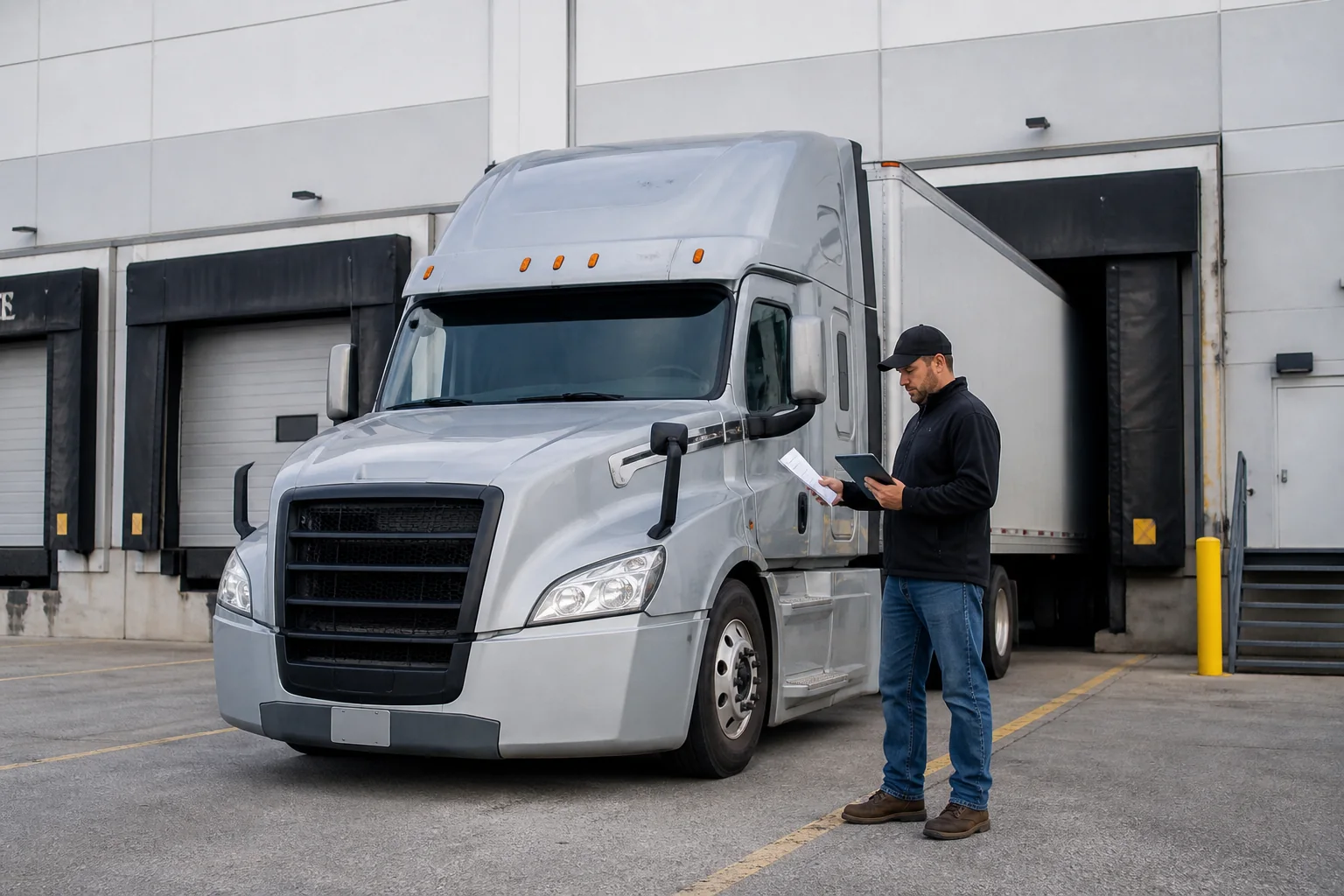
Truck drivers spend a significant part of their working lives at shippers and receivers.
When arriving for a pickup, the driver may first stop at a security gate and provide information such as a pickup number, company name, tractor number, trailer number, or driver's license. The facility may then assign a dock door or direct the driver to another part of the property.
Backing into the dock can be one of the most challenging parts of the day, particularly at older warehouses with limited space.
Once the trailer is positioned, loading begins.
Sometimes the process is quick. Other times the driver may wait for hours.
With a live load, the driver normally stays at the facility while workers load the trailer. With a drop-and-hook operation, the driver may leave one trailer and connect to another trailer that has already been loaded.
Drop-and-hook freight can save a significant amount of time because the driver does not have to wait for warehouse employees to finish loading.
After the trailer is loaded, the driver may need to obtain shipping paperwork, verify the trailer number, check the seal, inspect the trailer, and determine whether the load needs to be weighed.
Heavy loads may require a stop at a truck scale to confirm that gross and axle weights are legal before continuing the trip.
Weight Distribution Is Part of the Driver's Responsibility
A loaded trailer can change how the truck handles and whether the combination is legal.
For a typical tractor-trailer operating under general federal Interstate weight limits, drivers need to think about gross weight as well as weight carried by individual axle groups. Simply being below 80,000 pounds gross does not automatically guarantee that every axle is legal.
If too much freight is concentrated toward one part of the trailer, the drives or trailer tandems may carry excessive weight.
Drivers may use a commercial truck scale to check the tractor and trailer after loading. If an axle group is too heavy, adjusting the trailer tandems may help redistribute weight. In some cases, the freight must be repositioned by the shipper.
This is another example of why trucking involves more than driving.
A driver needs to understand how the load affects the entire tractor-trailer combination.
Fuel Stops Are Part of the Workday
A semi-truck carries a large amount of diesel fuel, but OTR drivers still need to plan fuel stops carefully.
Company drivers may receive specific instructions about where to fuel because carriers negotiate prices with particular truck-stop networks. The driver's fuel card may therefore work most efficiently at selected locations.
A fuel stop involves more than putting diesel in the tanks.
Drivers may also check DEF, clean the windshield, inspect tires, look over the trailer, use the restroom, buy food, and take advantage of the stop to complete a qualifying break when appropriate.
Large truck stops commonly provide other services important to drivers, including showers, restaurants, repair facilities, parking, laundry, and convenience stores.
For an OTR driver who may live in the truck for two or three weeks, these locations become part gas station, part rest area, and part temporary home base.
Experienced drivers try to combine tasks whenever possible. Instead of stopping once for fuel, again for food, and again shortly afterward for a break, they may plan one efficient stop that handles several needs.
Delivering Freight Can Be Completely Different at Every Customer
When the driver reaches the receiver, another part of the workday begins.
Every facility is different.
A huge distribution center may have dozens or even hundreds of loading docks, a large staging area, and clearly marked truck entrances. A small customer might have one narrow dock behind a building on a busy industrial street.
Finding the correct entrance can sometimes be harder than reaching the actual address.
This is why drivers often check satellite imagery, truck-specific navigation, customer notes, and instructions from dispatch before arriving.
At the gate, the driver usually checks in and receives instructions. That may mean backing into a specific dock, dropping the trailer in a yard, or waiting until a door becomes available.
The driver then needs to position a tractor-trailer that may be around 70 feet long into the assigned area without hitting another truck, trailer, building, pole, or person.
Backing is a major part of professional trucking.
Even experienced drivers sometimes need to stop, pull forward, reposition, or use GOAL — Get Out And Look. Taking extra time is far better than causing an accident because someone felt pressured to park quickly.
After unloading, the driver normally receives proof of delivery or other paperwork and sends or uploads the required documents according to the carrier's system.
Only then is the delivery truly complete.
Drivers Spend a Surprising Amount of Time Waiting
One of the biggest surprises for people entering trucking is how much of the job can involve waiting.
Drivers may wait for:
- Freight to be loaded.
- Freight to be unloaded.
- A dock to become available.
- Maintenance repairs.
- Dispatch instructions.
- Customer paperwork.
- Traffic to clear.
- A trailer to become ready.
This time is often referred to as detention when a driver is delayed at a shipper or receiver beyond the expected loading or unloading period.
For drivers paid primarily by the mile, excessive waiting can be especially frustrating because the truck is not moving and therefore may not be generating the same mileage-based compensation.
Some carriers provide detention pay after certain conditions are met, while policies vary significantly between companies.
The most successful drivers learn how to manage these delays without allowing frustration to affect their driving afterward.
If a customer keeps a driver for several hours, trying to "make up the time" by speeding or driving aggressively is not an acceptable solution.
Communication With Dispatch Happens Throughout the Day
Company drivers normally work with dispatchers or driver managers who coordinate freight and help keep trucks moving.
Communication may involve confirming pickup or delivery, reporting delays, asking questions about the next load, reporting mechanical issues, or explaining why a delivery schedule needs to change.
Many carriers now handle much of this communication electronically through an ELD, tablet, mobile application, or fleet-management system.
A driver may receive a message containing the next load's pickup location, appointment time, destination, trailer information, and special instructions.
Good communication is important because dispatch cannot see everything happening around the truck.
If a driver discovers a mechanical problem, encounters dangerous weather, becomes stuck at a customer, or realizes that an appointment cannot realistically be made within legal Hours of Service, that information needs to reach the company.
Professional drivers learn to communicate problems early rather than waiting until the situation becomes impossible to fix.
Weigh Stations and Roadside Inspections Are Normal Parts of Trucking
During the driving portion of the day, a truck may pass one or several weigh stations.
When an applicable station is open and the truck is required to enter, the driver follows signs into the facility. The truck may be weighed while moving slowly through a lane or on a static scale.
Some trucks are released almost immediately. Others may be directed to an inspection area.
Drivers may also use authorized electronic bypass systems through their carriers, but a bypass device does not mean a truck can automatically ignore every weigh station. Drivers must follow the actual bypass instruction and posted signs.
Roadside inspections can involve more than weight. Commercial vehicle enforcement personnel may examine the truck, trailer, driver credentials, Hours-of-Service records, cargo, brakes, tires, lights, and other safety-related components.
That is one reason good drivers treat inspections as something that could happen on any workday rather than preparing only when they expect enforcement.
Finding Parking Can Be One of the Hardest Parts of the Day
For OTR drivers, the workday often ends with another challenge: finding somewhere to park a 70-foot tractor-trailer.
Truck parking can become difficult in busy freight corridors and metropolitan areas, especially later in the evening.
That means experienced drivers normally think about parking long before their driving time is almost finished.
The driver might plan to stop at a truck stop, rest area, company terminal, customer facility, or another authorized location. It is also smart to have a backup plan because a parking lot that normally has available spaces may be completely full when the truck arrives.
Once a space is found, the driver still has to back into it safely.
Night parking can be particularly challenging. Parking lots are busy, visibility is reduced, pedestrians may walk between trucks, and other drivers may be entering or leaving at the same time.
The correct approach is to slow down, use both mirrors, make small corrections, pull forward when needed, and get out to check clearance whenever there is doubt.
There is no benefit to rushing the final five minutes of a 600-mile day.
The Day Often Ends With Another Equipment Check
After parking, many drivers perform another walk-around or post-trip check.
The purpose is to identify problems that may have developed during the day's driving.
A tire that looked fine in the morning may now be damaged. A light may have stopped working. A fluid leak may have appeared. Something on the trailer may have been damaged at a customer.
Finding the problem at the end of the day can give maintenance more time to address it before the next shift.
Drivers also finish any required paperwork, update the ELD as necessary, send delivery documents, communicate with dispatch, and review information about the next load.
For a local driver, this may happen back at the company terminal before going home.
For an OTR driver, the parked truck becomes home for the evening.
What Does an OTR Driver Do After Parking?
Once the professional part of the day is complete, life inside the sleeper cab begins.
Modern sleeper trucks may include a bed, storage cabinets, refrigerator, microwave, electrical outlets, climate control, and enough space for a driver to carry clothing, food, and other personal items.
Some drivers cook inside the truck. Others eat at truck stops or restaurants. A driver may take a shower, do laundry, call family, watch television, play games, use a laptop, or simply go to sleep.
Sleep is not optional downtime that can be ignored. Adequate rest is essential for safely operating a commercial vehicle the following day.
OTR drivers often repeat this routine for days or weeks before returning home.
That is one of the biggest differences between OTR and local trucking. A local driver may finish the shift and sleep at home every night, while a long-haul driver may wake up hundreds of miles from where the previous day began.
Is Every Truck Driver's Daily Routine the Same?
Not at all.
The type of freight and route can completely change the job.
A dry van driver may spend most of the day traveling between warehouses and distribution centers. Loading and unloading are often performed by warehouse employees, especially with palletized freight.
A reefer driver has similar responsibilities but also needs to monitor temperature requirements and the refrigeration unit. Grocery and food facilities may also have strict appointment schedules.
A flatbed driver may spend considerably more time working outside the truck because cargo often needs to be secured with chains, straps, binders, and sometimes tarps. Securement must also be inspected during the trip when required.
A tanker driver deals with different vehicle dynamics and specialized loading procedures. Depending on the cargo, tanker and Hazmat endorsements may be required.
Local delivery drivers may make many stops in one day and spend more time in city traffic. Some local jobs require drivers to unload products personally.
So when someone asks, "What does a truck driver do every day?" there is no single schedule that applies to the entire industry.
The basic responsibilities are similar, but the daily experience can be very different.
What Skills Does a Truck Driver Use Every Day?
Professional driving requires a mixture of physical driving ability and practical decision-making.
Backing and vehicle control are obvious skills, but successful drivers also become good at managing time, planning trips, solving problems, communicating, and remaining patient.
A driver may begin the morning with a perfectly organized plan and then encounter a highway closure two hours later. The customer may take four hours to unload. The next pickup may change. Parking may fill before the driver arrives.
The ability to adjust without making unsafe decisions is an important part of the job.
Drivers also need independence.
A dispatcher can provide information, but the driver is the person physically sitting in the truck. If a road is unsafe because of ice or wind, if the truck develops a mechanical problem, or if there is not enough space to safely make a turn, the driver has to recognize the problem.
Experience improves those decisions.
What Does a Typical OTR Day Look Like?
A simplified OTR day might look like this:
6:00 a.m. — Wake up and prepare for work. The driver checks weather, dispatch information, available Hours of Service, and the day's route.
6:30 a.m. — Pre-trip inspection. The tractor and trailer are inspected before departure.
7:00 a.m. — Begin driving. The driver starts toward the receiver or next pickup location.
10:30 a.m. — Fuel or rest stop. The truck is fueled and the driver checks the equipment again.
12:00 p.m. — Continue driving.
2:30 p.m. — Arrive at receiver. The driver checks in, backs into a dock, and waits for unloading.
4:00 p.m. — Receive next load. Dispatch sends information for another pickup.
5:00 p.m. — Pick up freight and inspect the load.
6:00 p.m. — Drive toward planned overnight parking.
7:30 p.m. — Park and complete end-of-day tasks. The driver performs a final equipment check, finishes paperwork, updates dispatch, and prepares to rest.
This is only an example.
A real day may begin at 2 a.m., noon, or any other time depending on freight appointments and the driver's schedule. One day might include 600 miles of highway driving, while another could involve only 200 miles because most of the shift was spent at warehouses.
That unpredictability is part of professional trucking.
Do Truck Drivers Drive Every Single Day?
Not necessarily.
OTR drivers may spend several consecutive days working and then take time off at home. Hours-of-Service limits also restrict how much on-duty time applicable drivers can accumulate over consecutive days.
A driver might also spend part of a day waiting for freight, completing a 34-hour restart when appropriate, sitting during equipment repairs, or taking scheduled home time.
Local trucking schedules can be more predictable. Some drivers work five days per week with weekends off, while others work nights, weekends, rotating schedules, or four longer shifts.
The trucking industry operates around the clock, so there are jobs available on many different schedules.
Is Being a Truck Driver Mostly Driving?
Driving is the central part of most tractor-trailer jobs, but describing trucking as "just driving" leaves out a large part of the profession.
A driver is responsible for safely managing an expensive commercial vehicle, protecting freight, meeting customer requirements, following transportation regulations, inspecting equipment, managing time, navigating truck restrictions, communicating with the carrier, and making decisions when plans change.
For long-haul drivers, there is another dimension: the truck is both workplace and temporary living space.
That combination makes trucking very different from a normal driving job.
A professional driver may spend much of the workday behind the wheel, but the decisions made before, during, and after driving are just as important as the miles themselves.
Final Thoughts
A truck driver's daily routine involves much more than driving from one destination to another.
The day may begin with checking the ELD, weather, route, and delivery information, followed by a complete pre-trip inspection. From there, the driver may spend several hours on the highway before fueling, entering weigh stations, picking up freight, backing into loading docks, scaling the truck, communicating with dispatch, and searching for legal parking.
At the end of the day, the driver may inspect the equipment again, complete paperwork, update the carrier, and prepare for the next shift.
For OTR drivers, that entire routine happens while living away from home for extended periods.
Some days run almost exactly according to plan.
Others involve traffic jams, mechanical problems, bad weather, long detention times, changed appointments, and full truck stops.
That is why professional trucking requires more than the ability to steer a semi-truck.
Good truck drivers learn to manage the vehicle, the freight, the clock, the route, and unexpected problems — every single day.